Landslide Alerts in Bali: Communities Mobilize for Increased Safety Measures
As heavy rains continue in Bali, communities brace for potential landslides, prompting local authorities to enhance safety protocols. Residents in vulnerable areas are urged to prepare as geological assessments indicate rising risks.
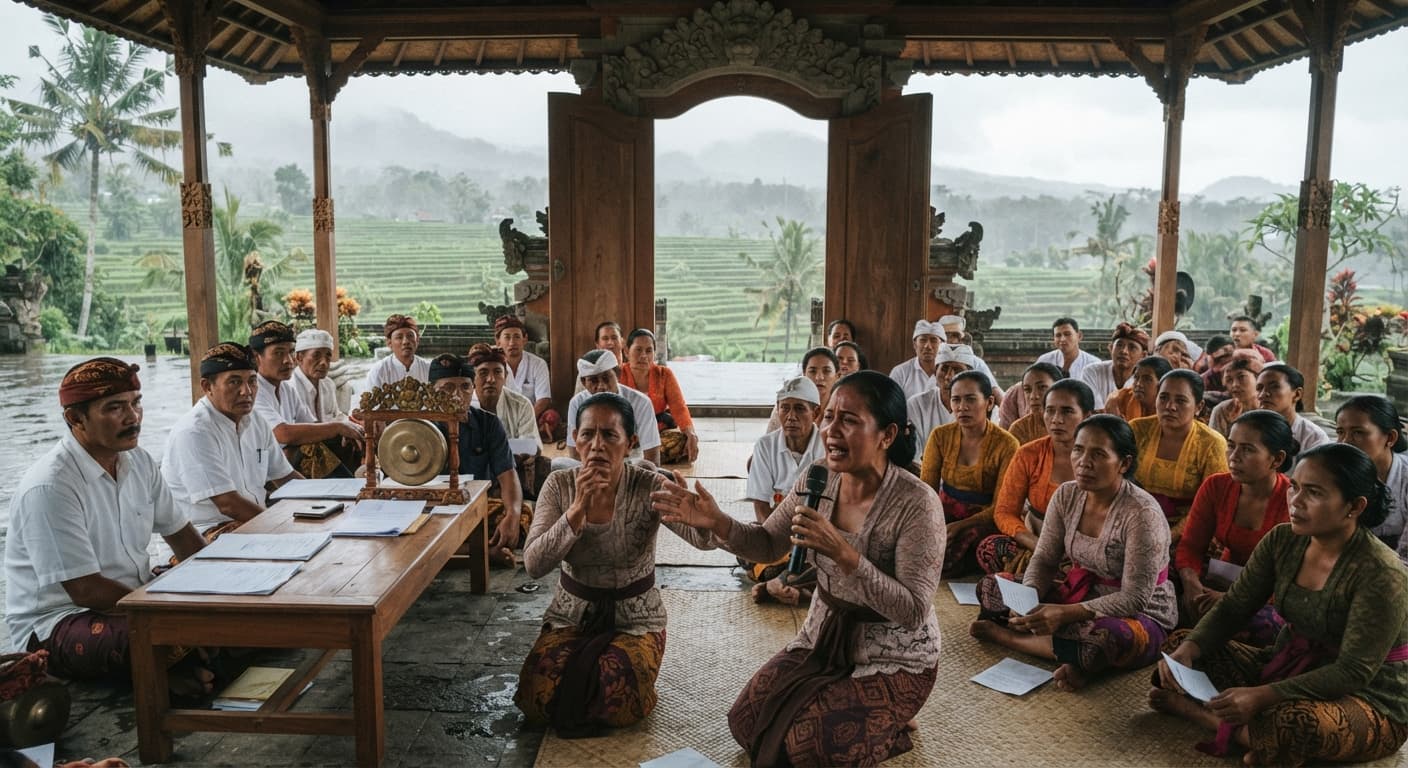
The air was thick with the scent of wet earth and the sound of rain pattering against rooftops as residents of Jatiluwih, a village nestled among Bali's lush rice terraces, gathered to discuss their growing concerns over landslide risks. The community meeting, held in a small local temple, was filled with apprehensive voices sharing experiences of near misses and the haunting memories of past landslides that had altered their lives forever.
As the rainy season settles over Bali, geological assessments conducted by the Indonesian Meteorology, Climatology, and Geophysics Agency (BMKG) indicate an alarming increase in landslide risks across several regions, particularly in areas with steep terrain. The heavy downpours have not only saturated the soil but have also led to unstable ground conditions that threaten homes and infrastructure.
According to data provided by BMKG, Bali experienced an unprecedented 300% increase in rainfall compared to the previous year, raising alarms among local disaster management authorities. This spike in precipitation has triggered a series of landslide alerts, particularly in the districts of Tabanan, Kintamani, and Ubud, where the terrain is inherently susceptible to such geological events.
At the meeting in Jatiluwih, village chief Putu Suardana emphasized the importance of community preparedness. “We cannot afford to be complacent. Every rainy season, we face the risk of landslides, but this year feels different. We must work together to ensure our safety,” he said, urging residents to take proactive measures such as reinforcing home structures and clearing drainage systems.
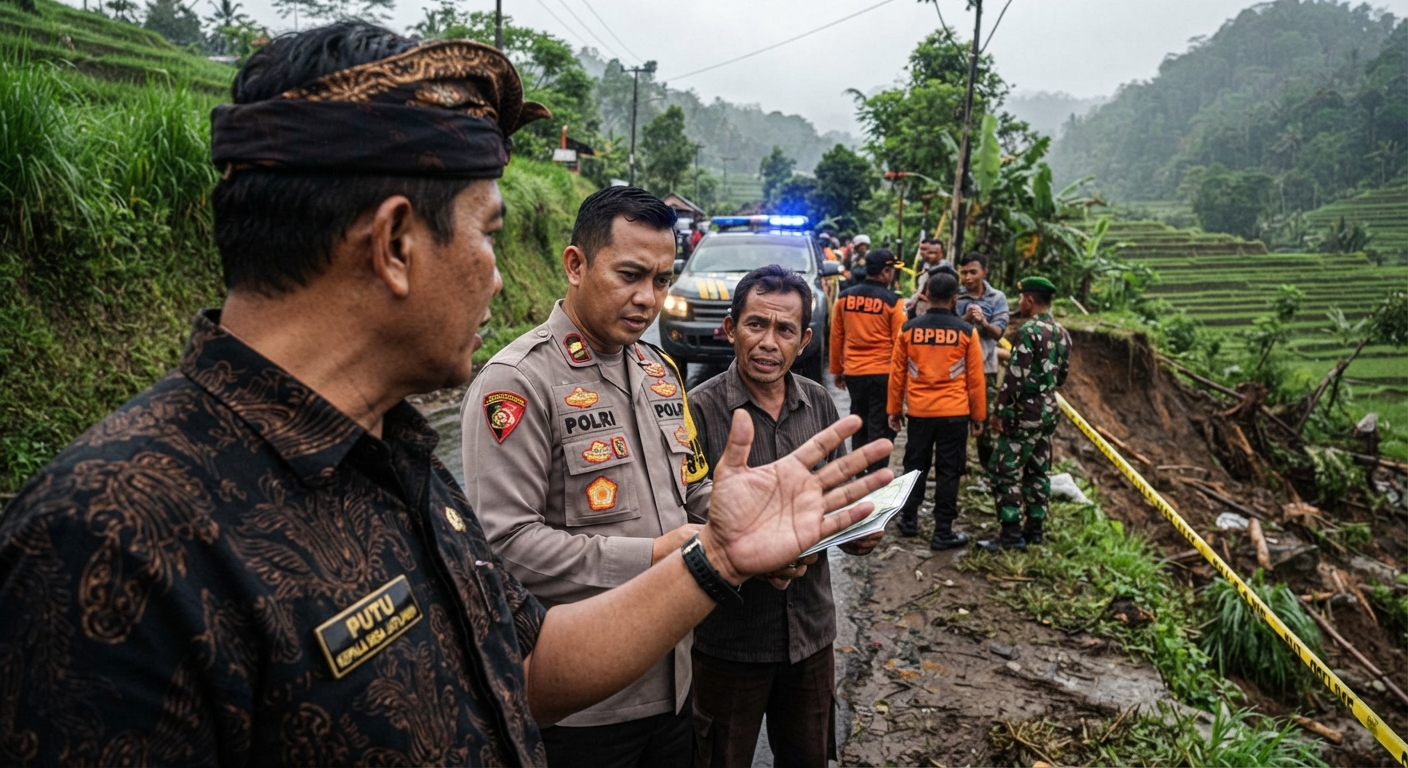
Emergency rescue teams from the local government are gearing up for a busy season, with plans to conduct regular assessments in high-risk areas. The head of the Bali Disaster Management Agency (BPBD), I Gusti Ngurah Rai, stated, “We are ramping up our efforts to monitor vulnerable areas and will deploy teams to assist communities in need. Education on landslide risks is crucial.”
In addition to official measures, local residents are also forming community groups to share information and resources. These grassroots initiatives have proven effective in fostering a culture of preparedness. “We have learned from past experiences. It’s better to be safe than sorry,” said Nyoman, a long-time resident of Jatiluwih, as she coordinated with her neighbors to clear debris from a nearby hillside.
Amid these efforts, experts warn that the situation could worsen if the rainfall continues at the current rate. Professor Asep Sulaiman, a geologist from Udayana University, notes that persistent heavy rains could lead to catastrophic landslides, especially in areas where deforestation has compromised the stability of the land. “We must address not only the immediate risks but also the long-term impact of land use changes that exacerbate these disasters,” he explained.

Local authorities are also advocating for the implementation of more sustainable land management practices to mitigate future risks. As the community faces these challenges, the resilience and solidarity shown by the residents of Jatiluwih serve as a reminder of the strength found in unity during times of crisis.
Looking ahead, the collaboration between community members, local government, and environmental experts will be crucial in navigating the rainy season safely. As the skies darken and the rains continue, the call for vigilance and preparedness resonates throughout Bali, reminding all of the delicate balance between nature's beauty and its potential for destruction.



Read Also from Other Categories

Ubud's Thriving Spiritual Tourism: A New Chapter in Visitor Engagement
Ubud is emerging as a key player in Bali's spiritual tourism scene, attracting visitors seeking authentic experiences. With a focus on local traditions and wellness, the area is redefining how tourists engage with Balinese culture.

Transforming Bali's Public Services: AI Integration Gains Momentum
The Bali provincial government is ramping up efforts to integrate artificial intelligence into public services, aiming for a more efficient administrative process. This shift reflects a growing trend across Indonesia as local governments adopt digital solutions to enhance service delivery.

Emerging Trends in Bali's Investment Landscape: The Rise of Impact Startups
Bali is witnessing a significant shift in investment trends as impact startups gain traction. With a focus on social and environmental benefits, these ventures are attracting both local and international funding in unprecedented ways.

Local Farmers Transition to Agro-Tourism Amidst Climate Challenges
As climate change impacts agriculture, Bali's farmers are embracing agro-tourism to sustain their livelihoods. This shift not only preserves local culture but also enhances community engagement and economic resilience.

Job Opportunities in Bali's Agriculture Sector: A Path to Sustainability
Bali's agriculture sector is undergoing a transformation, presenting new job opportunities to locals. With a focus on sustainable practices, training programs are paving the way for a greener future in employment.

Rethinking Bali's Digital Nomad Policies: A Call for Sustainable Integration
Bali's digital nomad community has surged by 35% in the past year, prompting discussions on the need for more structured policies. Experts argue that without strategic planning, the influx could strain local resources and cultural integrity.
Comments (0)
No comments yet. Be the first!