Foreign Investors Interested in Renewable Energy Project in East Bali
European and Japanese investors are eyeing a IDR 2 trillion solar power plant project in East Bali, signaling growing foreign interest in Indonesia's renewable energy sector. The project, if realized, could significantly boost the region's clean energy capacity and align with the government's net-zero ambitions.
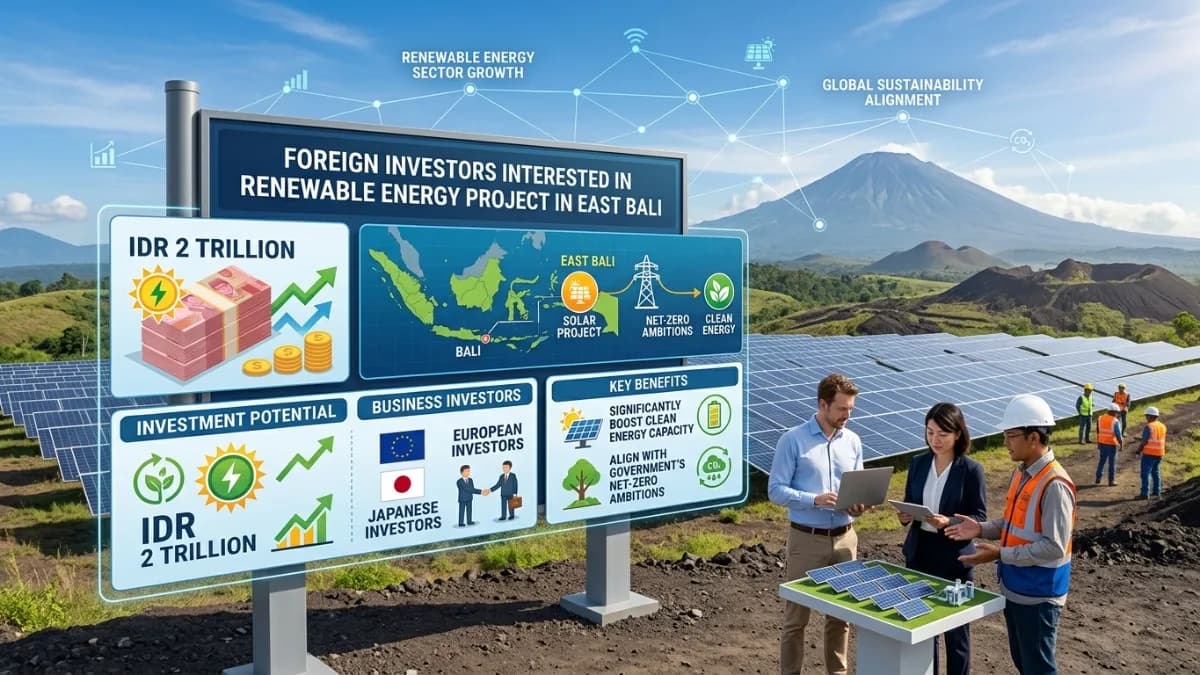
Several investors from Europe and Japan have expressed serious interest in developing a solar power plant (PLTS) in East Bali, with a planned total investment of IDR 2 trillion (approximately USD 130 million), according to regional officials. The project, still in its early feasibility stage, would mark one of the largest renewable energy investments in the island province and a significant step toward Bali's goal of reducing carbon emissions.
Senior officials from the Bali provincial investment office confirmed that a delegation of foreign investors recently conducted site visits to potential locations in the eastern regencies of Karangasem and Klungkung, where solar irradiance levels are considered optimal. The investors, representing consortia from Germany, the Netherlands, and Japan, have held preliminary discussions with the provincial government and the state electricity company PLN regarding grid connectivity and land permits.
"We welcome this interest and are facilitating the necessary permits and data requests," said I Wayan Sutama, head of the Bali Investment and One-Stop Services Agency. "The investors are serious, and we are working to ensure the project meets all environmental and spatial planning regulations."
Project Scope and Location
The proposed PLTS would have a capacity of approximately 150 megawatts, enough to power an estimated 100,000 households, according to preliminary documents shared during the discussions. The project area spans about 200 hectares of underutilized dry land in the eastern part of the island, which receives strong sunlight for most of the year.
Local community leaders in Karangasem have expressed cautious optimism, noting that the project could create hundreds of construction jobs and long-term maintenance positions. "We hope this will bring economic benefits while preserving our agricultural land," said Made Arya, a village chief in Bebandem district, one of the proposed sites. "We are asking for transparent communication and fair compensation if our land is used."
The project is still in the pre-feasibility stage, and no final agreements have been signed. Officials say a detailed feasibility study, including environmental impact assessment, is expected to be completed within the next six months.
Government Support and Regulatory Framework
Bali's provincial government has set a target of achieving 100% renewable energy by 2030, a goal that aligns with the national government's commitment to reach net-zero emissions by 2060. The island currently relies heavily on diesel and imported coal for its electricity, and solar power is seen as a key alternative.
"Bali is an ideal location for solar energy due to its high solar radiation and the strong commitment of the local government," said Dr. Ni Made Suastuti, an energy economist at Udayana University in Denpasar. "However, the project must navigate regulatory hurdles, including land certification and grid integration."
The national government has also introduced new regulations to attract foreign investment in renewable energy, including tax incentives and streamlined licensing procedures. The Investment Coordinating Board (BKPM) has listed solar power plants as a priority sector, and the recent Omnibus Law has simplified the process for foreign ownership.
PLN, the state utility, has expressed willingness to purchase the electricity generated, but tariff negotiations are still ongoing. "We are open to a power purchase agreement, but it must be fair for both parties," said a PLN spokesperson who declined to be named.
Economic and Environmental Impact
The IDR 2 trillion investment would be a significant boost to Bali's economy, which was severely affected by the COVID-19 pandemic. The province's GDP is still recovering, and foreign investment in infrastructure is seen as a way to diversify beyond tourism.
"This project could create a new economic pillar for East Bali," said Sutama. "It will bring jobs, technology transfer, and a more reliable electricity supply for our communities."
Environmental groups have welcomed the initiative but urged caution. "Solar power is clean, but we must ensure the land use does not conflict with water resources or biodiversity," said Wayan Gede, a coordinator for the Bali Environmental Forum. "We recommend a thorough assessment and community engagement."
The project's timeline is still uncertain, but officials hope to sign a memorandum of understanding with the investor consortium by the end of this year. If all goes as planned, construction could begin in 2026 and be completed within two years.
As Bali continues to position itself as a green destination, the success of this project could serve as a model for other renewable energy initiatives across Indonesia. The investors, for their part, see East Bali as a gateway to the broader Southeast Asian market, and they are closely watching the regulatory environment before making a final commitment.


Read Also from Other Categories

Emerging Trends in Bali's Adventure Tourism: Thrilling New Experiences Await
Bali's adventure tourism sector is rapidly evolving, offering visitors thrilling experiences that go beyond traditional attractions. From canyoning in Ubud to zip-lining in Gianyar, the island is becoming a hub for adrenaline seekers and nature enthusiasts alike.

Local Farmers Rally for Support Amid Bali's Agricultural Policy Shift
As Bali's provincial government implements new agricultural policies, local farmers express concerns over their livelihoods. The shift aims to modernize practices but raises questions about sustainability and community impact.

Canggu Residents Alarmed by Rising Incidents of Coastal Erosion
As Canggu's picturesque coastline faces increasing erosion, local residents and businesses express urgent concerns. The ongoing erosion threatens homes, livelihoods, and the area's renowned tourism appeal.

Community-Led Initiatives Foster Urban Infrastructure Growth in Denpasar
Residents of Denpasar are taking the lead in improving urban infrastructure through collaborative projects. Local government support amplifies these initiatives, aiming to enhance the city's livability amidst rapid urbanization.
Bali's New Career Hub: Empowering Local Job Seekers with Innovative Training
Bali's job seekers are gaining new opportunities through a strategic partnership between local businesses and vocational training centers. This initiative aims to equip the workforce with essential skills to meet the demands of a rapidly changing job market.
Navigating Bali's Evolving Social Landscape: Challenges and Opportunities
As Bali grapples with increasing social disparities, experts urge a reevaluation of community policies. Understanding these shifts is crucial for fostering a more equitable future for all residents.
Comments (0)
No comments yet. Be the first!