Bali's Local Farmers Embrace Organic Practices to Revive Agriculture
As Bali faces environmental challenges, local farmers are turning to organic farming methods to restore soil health and biodiversity. This grassroots movement not only enhances food security but also preserves the island's agricultural heritage.
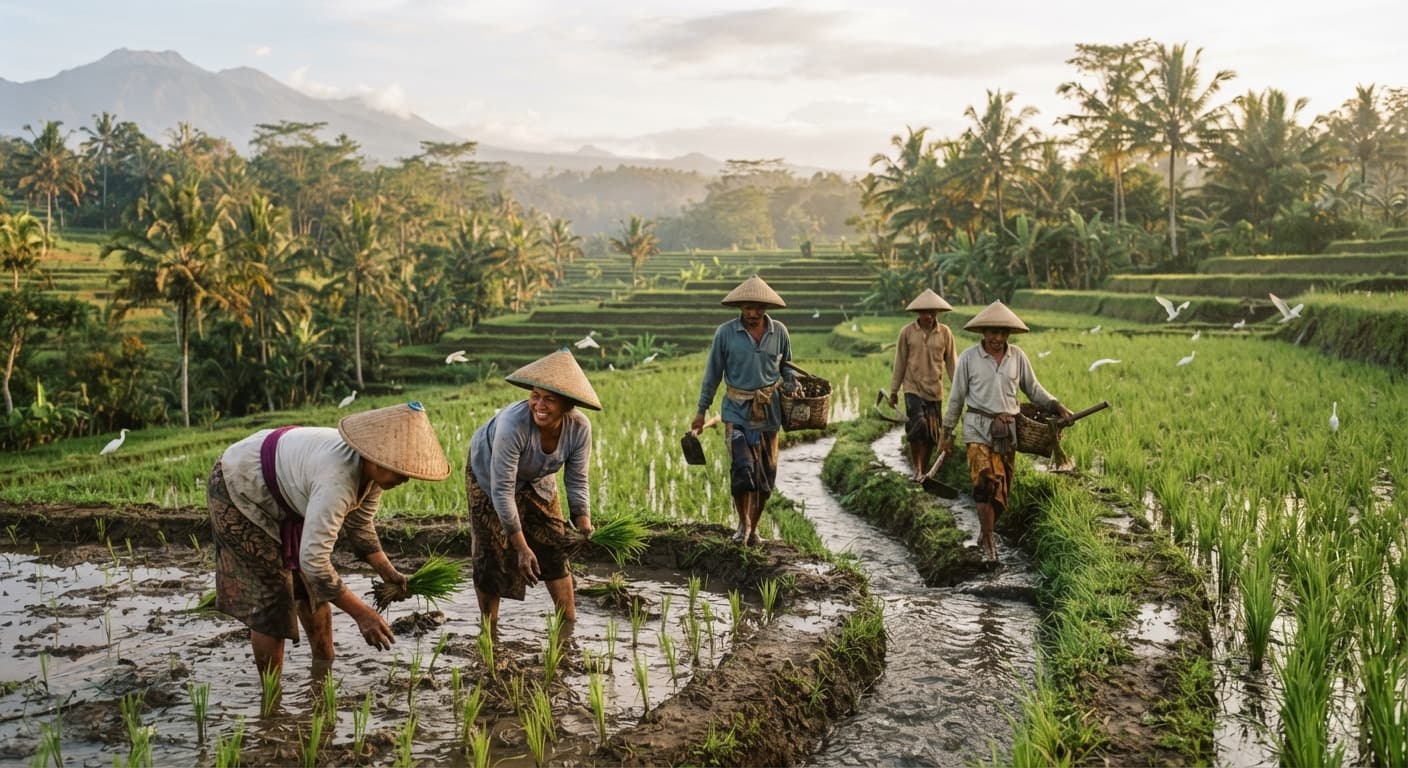
In the early morning light, the vibrant green fields of Tabanan shimmer under the rising sun. A group of farmers, clad in traditional sarongs and wide-brimmed hats, is busy at work, carefully tending to their organic rice paddies. The rhythmic sound of water flowing through the irrigation channels mingles with the distant calls of birds, creating a serene backdrop for a transformative agricultural movement.
The shift towards organic farming in Bali is not merely a trend; it is a response to the pressing environmental challenges that have threatened the island’s agricultural legacy. With the increasing use of chemical fertilizers and pesticides leading to soil degradation and health concerns, communities are banding together to revive sustainable practices. According to recent studies, organic farming can improve soil quality by enhancing its microbial diversity, which is crucial for long-term agricultural productivity.
One of the key figures in this movement is I Made Sudarma, a local farmer and advocate for sustainable agriculture. “We have to respect the land and the traditions of our ancestors,” he explains while demonstrating natural pest control methods using local herbs. “Organic farming not only helps our soil but also produces healthier food for our families and the community.” His farm, once reliant on chemical inputs, has now become a model for others, showcasing the benefits of organic methods.
The initiative has gained traction through various community workshops organized by the Bali Organic Association (BOA), which aims to educate farmers about organic techniques and their benefits. “Education is vital,” says Nyoman Sari, a representative of BOA. “We need to equip farmers with the knowledge to make informed decisions about their practices.” Workshops cover topics such as composting, crop rotation, and natural pest management, all tailored to the unique agricultural conditions of Bali.

Additionally, the Bali provincial government has begun to recognize the importance of organic agriculture in its broader environmental policies. In a recent statement, the Head of Agriculture Department, Dr. I Wayan Sudiarta, emphasized the need for sustainable practices to combat climate change and preserve biodiversity. “Our goal is to support farmers transitioning to organic methods through subsidies and technical assistance,” he stated. This support is crucial as it not only helps farmers economically but also fosters a healthier ecosystem.
The impact of these initiatives is already visible. In the village of Ubud, where tourism flourishes, local organic farmers have started supplying restaurants and markets with fresh produce. This local supply chain not only boosts the economy but also reduces the carbon footprint associated with food transport. Diners at popular eateries can now enjoy dishes made from ingredients sourced just a few kilometers away, allowing them to experience the true flavors of Bali.
Moreover, this organic movement is intertwined with cultural preservation. Many farmers are reviving traditional Balinese agricultural practices, such as the Subak system, an ancient irrigation method recognized by UNESCO. The Subak system embodies the island’s communal approach to water management and has been instrumental in maintaining the balance between agriculture and nature. By integrating these traditional practices with modern organic techniques, farmers are ensuring that Bali’s agricultural heritage is passed down to future generations.

However, challenges remain. The transition to organic farming is often met with skepticism. Farmers accustomed to chemical inputs may hesitate to switch due to perceived risks of lower yields and higher labor costs. To address these concerns, successful case studies and testimonials from local farmers who have embraced organic methods are shared during community meetings. “Seeing is believing,” says I Made, referring to the tangible benefits seen on his farm. “When others see how healthy and productive my fields are, they start to rethink their practices.”
The movement is also gaining attention beyond Bali. Environmental organizations and NGOs are increasingly focusing on Indonesia’s agricultural sector, advocating for sustainable practices as a means to combat deforestation and promote biodiversity. Collaborative projects are emerging, linking local farmers with international markets seeking organic produce, thereby opening new avenues for income.
As the sun sets over the lush fields of Tabanan, the farmers gather to share stories and lessons learned from their day’s work. Their laughter and camaraderie reflect a shared commitment to nurturing the land and preserving their cultural identity. The future of Bali’s agriculture, rooted in organic principles, appears promising. With continued support and education, these local initiatives may well pave the way for a more sustainable and resilient agricultural landscape.


Read Also from Other Categories

Exploring Bali's Thriving Community-Based Tourism Initiatives
Bali is witnessing a significant rise in community-based tourism initiatives that are enhancing local engagement and visitor experiences. This trend, driven by local artisans and sustainable practices, is reshaping the tourism landscape across the island.

Jakarta's Expansion Plans Prompt Bali's Government to Rethink Land Policies
As Jakarta prepares for significant urban expansion, Bali's provincial government faces pressure to update its land use regulations. This shift aims to balance development with preservation amidst concerns from local communities.

Bali's Insurance Tech Startups Attract Major Investments Amid Global Trends
Bali's insurance technology sector is rapidly gaining traction, with several startups securing significant funding in 2023. Investors are drawn to innovative solutions addressing local and global insurance challenges, signaling a shift in the investment landscape.

Power Outages Plague Bali as Storms Intensify, Local Businesses Struggle
Frequent power outages across Bali have heightened concerns for local businesses as storms wreak havoc. With mounting disruptions, community members are calling for urgent improvements to the island's electrical infrastructure.

Job Market Transformation: Bali's Shift to Remote Work Opportunities
Bali's job market is evolving, with remote work opportunities surging by 30% in the past year. This trend is reshaping employment patterns and attracting a diverse talent pool to the island.

Cafes and Culture: The Role of Community Spaces in Bali's Recovery
As Bali emerges from the pandemic, community cafes are becoming vital hubs for cultural exchange and economic revitalization. These spaces are not only serving coffee but also fostering a sense of belonging and collaboration among locals and visitors alike.
Comments (0)
No comments yet. Be the first!