Bali's Job Market Blooms: New Opportunities Amid Economic Growth
Bali's job market is surging with new opportunities as job fairs and training programs across the island attract thousands of seekers, signaling a robust economic recovery. Government and private initiatives aim to diversify the economy beyond tourism, promising long-term growth and improved living standards.
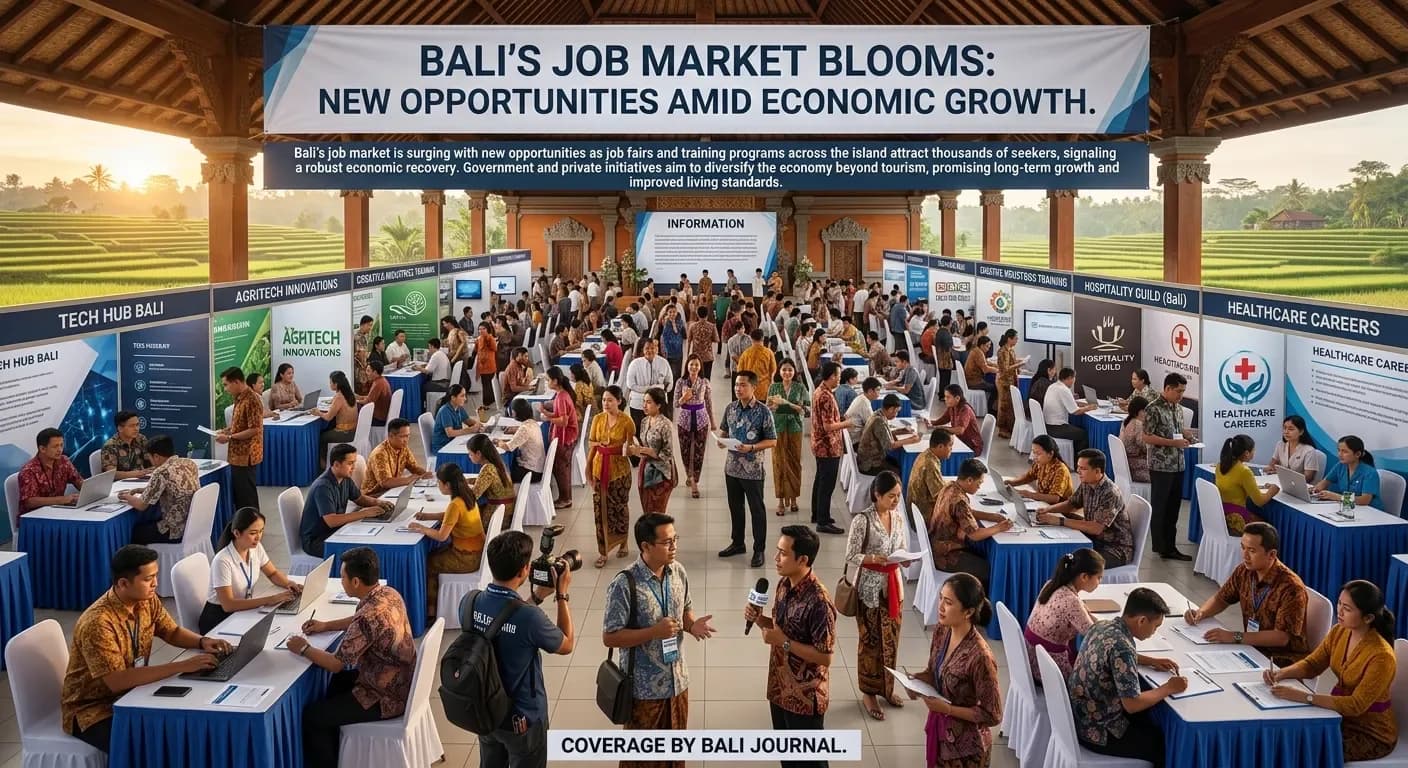
Bali is experiencing a notable resurgence in its job market, with a wave of employment opportunities, job fairs, and training programs sweeping across the island. From the bustling streets of Denpasar to the digital nomad hubs of Canggu, the demand for skilled labor is on the rise, fueled by the island's recovery from the economic devastation wrought by the COVID-19 pandemic. Local businesses, in tandem with government officials, including the Governor of Bali, have spearheaded these efforts to meet the growing needs of a diversifying economy.
Over the past six months, Bali has played host to multiple job fairs and launched a series of training initiatives designed to strengthen its workforce. The most recent fair, held at Renon's Puputan Park, drew over 5,000 job seekers and showcased more than 200 companies spanning key sectors such as tourism, information technology, and hospitality. In parallel, a government-backed program is offering free vocational training in fields ranging from digital marketing to culinary arts, aiming to equip locals with the skills demanded by a modern economy.
"Our goal is to ensure that every Balinese has access to quality employment opportunities," stated Wayan Koster, the Governor of Bali, during a press conference last week. His remarks underscore a broader commitment to not only revive but also transform the island's economic landscape. Echoing this sentiment, local business owner Ayu Laksmi noted, "With the new training programs, we are seeing a much-needed increase in skilled workers, which is crucial for the island's growing economy."
Historically, Bali's economy has leaned heavily on tourism, which once accounted for a significant portion of its GDP and employment. The pandemic, however, exposed the fragility of this dependence, causing unemployment to spike as borders closed and visitors vanished. In response, a collaborative push between the local government and the private sector has sought to diversify the economy, nurturing emerging industries such as tech startups, creative services, and sustainable agriculture. These efforts are now beginning to yield tangible results, with new sectors creating jobs and attracting investment.
The impact of this job market revival is expected to be profound, potentially lowering unemployment rates and raising the standard of living for Bali's residents. For the island's millions of annual tourists, the benefits could translate into enhanced services, as businesses staff up with better-trained and more motivated employees. Improved customer experiences in hotels, restaurants, and tour operations could further solidify Bali's reputation as a premier global destination.
However, not all observers are convinced that the current initiatives are enough. Critics argue that while job fairs and training programs are welcome steps, they may fail to address deeper structural issues within Bali's labor market. "We need more long-term solutions that include sustainable industry development," said Ketut Suryawan, an economist at Udayana University. Suryawan and other experts call for policies that foster stable, high-quality employment beyond seasonal and informal work, ensuring that growth is inclusive and resilient.
Looking ahead, the trajectory of Bali's job market appears promising. The government has announced plans to host additional job fairs and expand the scope of training offerings to keep pace with the evolving demands of the workforce. These initiatives are part of a broader strategy to position Bali as a competitive player in both national and international arenas, attracting talent and investment while nurturing local skills.
Local communities are also playing a role in this transformation. In villages across the island, cooperatives and small business associations are organizing their own skill-sharing workshops, complementing government efforts. Such grassroots movements highlight a collective determination to build a more resilient economy, one that can withstand future shocks and provide opportunities for all Balinese.
As Bali continues to navigate its post-pandemic recovery, the synergy between public policy, private enterprise, and community action will be crucial. The island's ability to adapt and innovate will determine not only its economic health but also the well-being of its people. With a renewed focus on diversification and skills development, Bali is charting a course toward a more stable and prosperous future, one job at a time.


Read Also from Other Categories

Emerging Trends in Bali's Adventure Tourism: Thrilling New Experiences Await
Bali's adventure tourism sector is rapidly evolving, offering visitors thrilling experiences that go beyond traditional attractions. From canyoning in Ubud to zip-lining in Gianyar, the island is becoming a hub for adrenaline seekers and nature enthusiasts alike.

Local Farmers Rally for Support Amid Bali's Agricultural Policy Shift
As Bali's provincial government implements new agricultural policies, local farmers express concerns over their livelihoods. The shift aims to modernize practices but raises questions about sustainability and community impact.

Investors Shift Focus to Bali's Innovative Aquaculture Ventures in 2023
Bali's aquaculture sector has seen a remarkable 35% increase in investment this year, attracting both local and international funding. The surge is driven by a growing demand for sustainable seafood and innovative farming techniques.

Canggu Residents Alarmed by Rising Incidents of Coastal Erosion
As Canggu's picturesque coastline faces increasing erosion, local residents and businesses express urgent concerns. The ongoing erosion threatens homes, livelihoods, and the area's renowned tourism appeal.

Community-Led Initiatives Foster Urban Infrastructure Growth in Denpasar
Residents of Denpasar are taking the lead in improving urban infrastructure through collaborative projects. Local government support amplifies these initiatives, aiming to enhance the city's livability amidst rapid urbanization.

Navigating Bali's Evolving Social Landscape: Challenges and Opportunities
As Bali grapples with increasing social disparities, experts urge a reevaluation of community policies. Understanding these shifts is crucial for fostering a more equitable future for all residents.
Comments (0)
No comments yet. Be the first!