Bali's Hidden Dangers: Rising Accidents on Popular Tourist Trails
As Bali's tourism rebounds, safety concerns mount with a surge in accidents on popular trails. Recent incidents highlight the urgent need for better safety measures in tourist hotspots.

Bali, a paradise known for its stunning landscapes and vibrant culture, is facing a troubling increase in accidents across its popular hiking trails. From the lush pathways of Campuhan Ridge Walk to the rugged terrains of Mount Batur, tourists are finding themselves in precarious situations that have raised alarm bells among local authorities and residents alike.
In recent weeks, the picturesque Campuhan Ridge Walk in Ubud has become the site of multiple accidents. Witnesses reported seeing a young Australian tourist slip and fall while attempting to capture the perfect Instagram shot. The incident prompted immediate calls for enhanced safety measures along the trail, which, despite its beauty, has steep drops and uneven surfaces that can be treacherous for the unprepared.
“We often see tourists more focused on their cameras than their footing,” said Nyoman, a local guide who frequently leads groups along the trail. “It’s beautiful, but we need to remind visitors that safety comes first.” Nyoman's experience echoes a growing sentiment among locals who worry that the influx of tourists could overshadow necessary precautions.
Further north, Mount Batur, famous for its sunrise treks, is another hotspot for safety concerns. Just last week, a group of trekkers encountered a serious incident when one member fell and suffered injuries that required hospitalization. The trek, which is usually a thrilling experience, has seen increased foot traffic since Bali reopened to international visitors, straining the existing infrastructure.
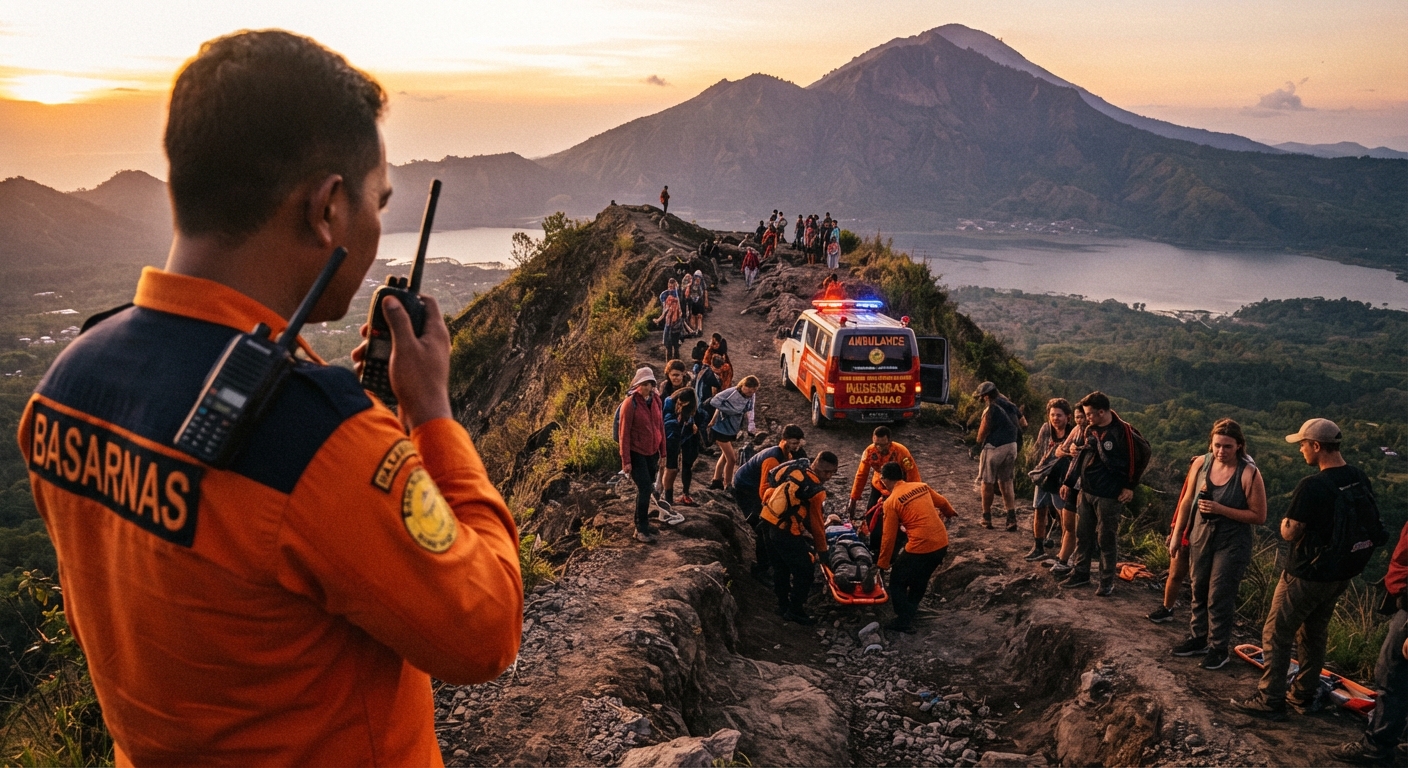
Local authorities in Bangli Regency have acknowledged the rising number of accidents. They are now considering implementing stricter regulations on guiding services and enhancing trail safety through clearer signage and improved path maintenance. “We want to ensure both tourists and the environment are protected,” stated Kadek, a representative from the Bangli tourism office. “Safety is a priority, and we are working on solutions.”
Moreover, the recent influx of rainy weather has exacerbated the situation. Trails that are usually dry and manageable have turned muddy and slick, increasing the risk of slips and falls. In the past month alone, over ten accidents have been reported on trails during adverse weather conditions, leading to serious injuries that could have been avoided with appropriate warnings.
In response to these rising incidents, local businesses are stepping up. Companies that offer guided tours are now emphasizing safety gear, including sturdy footwear and walking sticks, as essential items for their clients. “We want our guests to enjoy the beauty of Bali without the risks,” remarked Wayan, a tour operator based in Ubud. “We educate them about the trails and ensure they are well-equipped.”
Despite these efforts, some tourists remain unaware of the risks. Sarah, a recent visitor from the UK, shared her experience: “I didn’t think twice about the trail’s difficulty. It was only when I stumbled that I realized how unprepared I was.” Her story is a reminder that awareness is key, not just for the tourists, but also for the businesses that host them.
Local communities are also advocating for a more comprehensive approach to safety, calling for collaborations between the government, tourism boards, and local businesses. “We need a united front to tackle these issues,” said I Made, a community leader in Ubud. “Education is vital, but so is infrastructure.”
As the demand for adventure tourism in Bali grows, it is crucial for all stakeholders to prioritize safety measures. With the number of accidents on the rise, a proactive approach can prevent future tragedies and ensure that Bali remains a safe destination for all who visit. The beauty of Bali should be complemented by the assurance that tourists can explore its trails without fear of injury.



Read Also from Other Categories

Exploring Bali's Thriving Community-Based Tourism Initiatives
Bali is witnessing a significant rise in community-based tourism initiatives that are enhancing local engagement and visitor experiences. This trend, driven by local artisans and sustainable practices, is reshaping the tourism landscape across the island.

Jakarta's Expansion Plans Prompt Bali's Government to Rethink Land Policies
As Jakarta prepares for significant urban expansion, Bali's provincial government faces pressure to update its land use regulations. This shift aims to balance development with preservation amidst concerns from local communities.

Bali's Insurance Tech Startups Attract Major Investments Amid Global Trends
Bali's insurance technology sector is rapidly gaining traction, with several startups securing significant funding in 2023. Investors are drawn to innovative solutions addressing local and global insurance challenges, signaling a shift in the investment landscape.

Community Efforts Push for Sustainable Development in Bali's Rural Areas
Local initiatives are driving a new wave of sustainable development in Bali's rural regions, focusing on infrastructure, education, and cultural preservation. As communities collaborate, the impact is reshaping their futures positively and sustainably.

Job Market Transformation: Bali's Shift to Remote Work Opportunities
Bali's job market is evolving, with remote work opportunities surging by 30% in the past year. This trend is reshaping employment patterns and attracting a diverse talent pool to the island.

Cafes and Culture: The Role of Community Spaces in Bali's Recovery
As Bali emerges from the pandemic, community cafes are becoming vital hubs for cultural exchange and economic revitalization. These spaces are not only serving coffee but also fostering a sense of belonging and collaboration among locals and visitors alike.
Comments (0)
No comments yet. Be the first!