Opinion: Bali Traffic Solution Not Just Infrastructure, But Also Behavior Change
Bali's worsening traffic congestion in Denpasar and Badung demands more than new roads; experts argue that behavioral change and investment in public transport are essential. Without a shift in driving culture, infrastructure alone will fail to solve the problem.
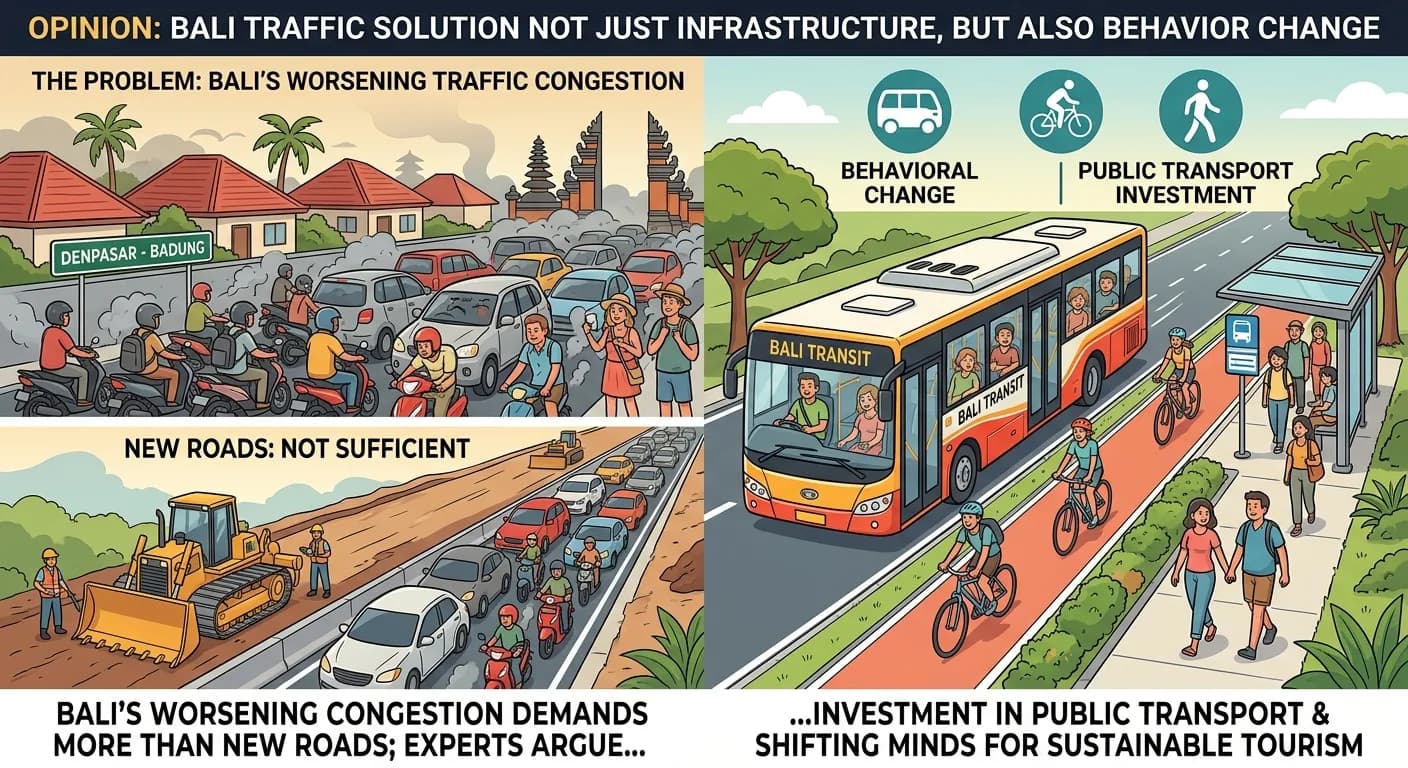
Bali's traffic congestion, particularly in the densely populated areas of Denpasar and Badung, has reached a critical point, prompting calls for massive infrastructure projects. However, transportation experts warn that building new roads or widening existing ones will not solve the problem unless there is a fundamental shift in public behavior and a willingness to embrace public transportation.
Wayan Suardika, a transportation observer based in Denpasar, argues that the current approach is shortsighted. "Infrastructure solutions alone are not enough," he said in an interview. "Without changes in public driving behavior and willingness to switch to public transportation, new roads will soon be full again."
The island's road network, designed for a much smaller population and tourist influx, is buckling under the weight of over 1 million registered vehicles in Bali, a number that grows by roughly 5% annually, according to the Bali Transportation Agency. In Denpasar alone, the number of private cars has doubled in the past decade, while the road capacity has increased by less than 10%.
The tourism sector, which accounts for nearly 60% of Bali's economy, is particularly vulnerable. Traffic jams along the route from Ngurah Rai International Airport to popular destinations like Kuta, Seminyak, and Ubud have become notorious, with tourists often spending hours in transit. This not only diminishes the visitor experience but also threatens the island's reputation as a world-class destination.
Local residents are feeling the strain as well. Commuters from Badung regency, which includes the bustling areas of Kuta and Jimbaran, report spending an average of two hours each way to reach their workplaces in Denpasar. "It's exhausting," said Made Ariani, a hotel employee who commutes daily from Mengwi to Kuta. "Every day, I leave home at 6 a.m. to avoid the worst of the traffic, but even then, it's a gamble."
In response, the provincial government has announced plans for several major infrastructure projects, including a new toll road connecting the airport to the northern part of the island and a light rail transit (LRT) system. However, these projects are years away from completion and face significant funding and land acquisition hurdles.
Experts argue that a more immediate and cost-effective solution lies in changing how people move. "The government needs to consistently develop a comfortable and affordable public transportation system," Suardika said, "while promoting a culture of orderly traffic and sharing the road with public vehicles."
Bali's current public transportation network is fragmented. The Trans Sarbagita bus system, which connects Denpasar, Badung, Gianyar, and Tabanan, operates only a limited number of routes and is often criticized for being unreliable and infrequent. Meanwhile, the iconic bemo (minibus) service has declined sharply, leaving many residents with no choice but to drive.
Behavioral change, however, is not easy. "Bali has a strong car culture," said I Made Sudiana, a sociologist at Udayana University. "Many people see owning a car as a status symbol, and they resist using public transport because they view it as a step backward." Sudiana suggests that the government could incentivize carpooling and introduce congestion pricing in the busiest zones, similar to measures in Singapore and London.
Another challenge is the lack of pedestrian and cycling infrastructure. In Denpasar, sidewalks are often narrow, poorly maintained, or entirely absent, making walking or cycling a dangerous option. "We cannot expect people to give up their cars if we don't provide safe and comfortable alternatives," Suardika noted.
The environmental stakes are high as well. Bali's air quality has deteriorated in recent years, with vehicle emissions being a major contributor. A study by the Ministry of Environment found that transportation accounts for over 70% of air pollution in Denpasar, leading to respiratory illnesses among residents.
Tourism industry leaders are also calling for action. The Bali Tourism Board has proposed a shuttle service from the airport to major hotel clusters, but it has yet to gain traction. "We need a coordinated effort between the government, the private sector, and the community," said Ketut Ardana, chairman of the board. "If we don't act now, the traffic will choke the very industry that sustains us."
Looking ahead, the government has pledged to prioritize public transport in its next five-year plan. This includes expanding the Trans Sarbagita fleet, introducing electric buses, and developing a dedicated bus rapid transit (BRT) corridor along the island's busiest routes. However, funding remains a major obstacle, and some analysts question whether the political will will survive leadership changes.
For now, the gridlock continues. On a recent Friday evening, the road from Kuta to Denpasar was a sea of brake lights, with vehicles barely moving for over an hour. "We have to change our mindset," Suardika said. "Infrastructure is important, but it is not a silver bullet. The real solution lies in how we, as a society, choose to move."
As Bali grapples with this challenge, the world will be watching. The island's ability to balance growth with sustainability will serve as a test case for other tourist-dependent regions. The question is whether the island can adapt before its roads—and its people—reach a breaking point.



Read Also from Other Categories

Emerging Trends in Bali's Adventure Tourism: Thrilling New Experiences Await
Bali's adventure tourism sector is rapidly evolving, offering visitors thrilling experiences that go beyond traditional attractions. From canyoning in Ubud to zip-lining in Gianyar, the island is becoming a hub for adrenaline seekers and nature enthusiasts alike.

Local Farmers Rally for Support Amid Bali's Agricultural Policy Shift
As Bali's provincial government implements new agricultural policies, local farmers express concerns over their livelihoods. The shift aims to modernize practices but raises questions about sustainability and community impact.

Investors Shift Focus to Bali's Innovative Aquaculture Ventures in 2023
Bali's aquaculture sector has seen a remarkable 35% increase in investment this year, attracting both local and international funding. The surge is driven by a growing demand for sustainable seafood and innovative farming techniques.

Canggu Residents Alarmed by Rising Incidents of Coastal Erosion
As Canggu's picturesque coastline faces increasing erosion, local residents and businesses express urgent concerns. The ongoing erosion threatens homes, livelihoods, and the area's renowned tourism appeal.

Community-Led Initiatives Foster Urban Infrastructure Growth in Denpasar
Residents of Denpasar are taking the lead in improving urban infrastructure through collaborative projects. Local government support amplifies these initiatives, aiming to enhance the city's livability amidst rapid urbanization.
Bali's New Career Hub: Empowering Local Job Seekers with Innovative Training
Bali's job seekers are gaining new opportunities through a strategic partnership between local businesses and vocational training centers. This initiative aims to equip the workforce with essential skills to meet the demands of a rapidly changing job market.
Comments (0)
No comments yet. Be the first!